Designing perps, options, and liquidity products traders can trust with real capital.
Typus is a real yield derivatives protocol on Sui. As the sole product designer I owned eight product surfaces, their on-chain transaction states, a token-based design system, and a full rebrand. This case follows the product decisions that made capital risk visible, then the system that carried the new brand.
Shipped: Sole designer for eight product surfaces. Perps and the TLP liquidity pool are live on Sui mainnet, designed from first action to every transaction state.
Key decision: Make irreversible on-chain states visible before commitment. Liquidation risk, funding, and the T+1 profit lock live inside the flow, not in documentation.
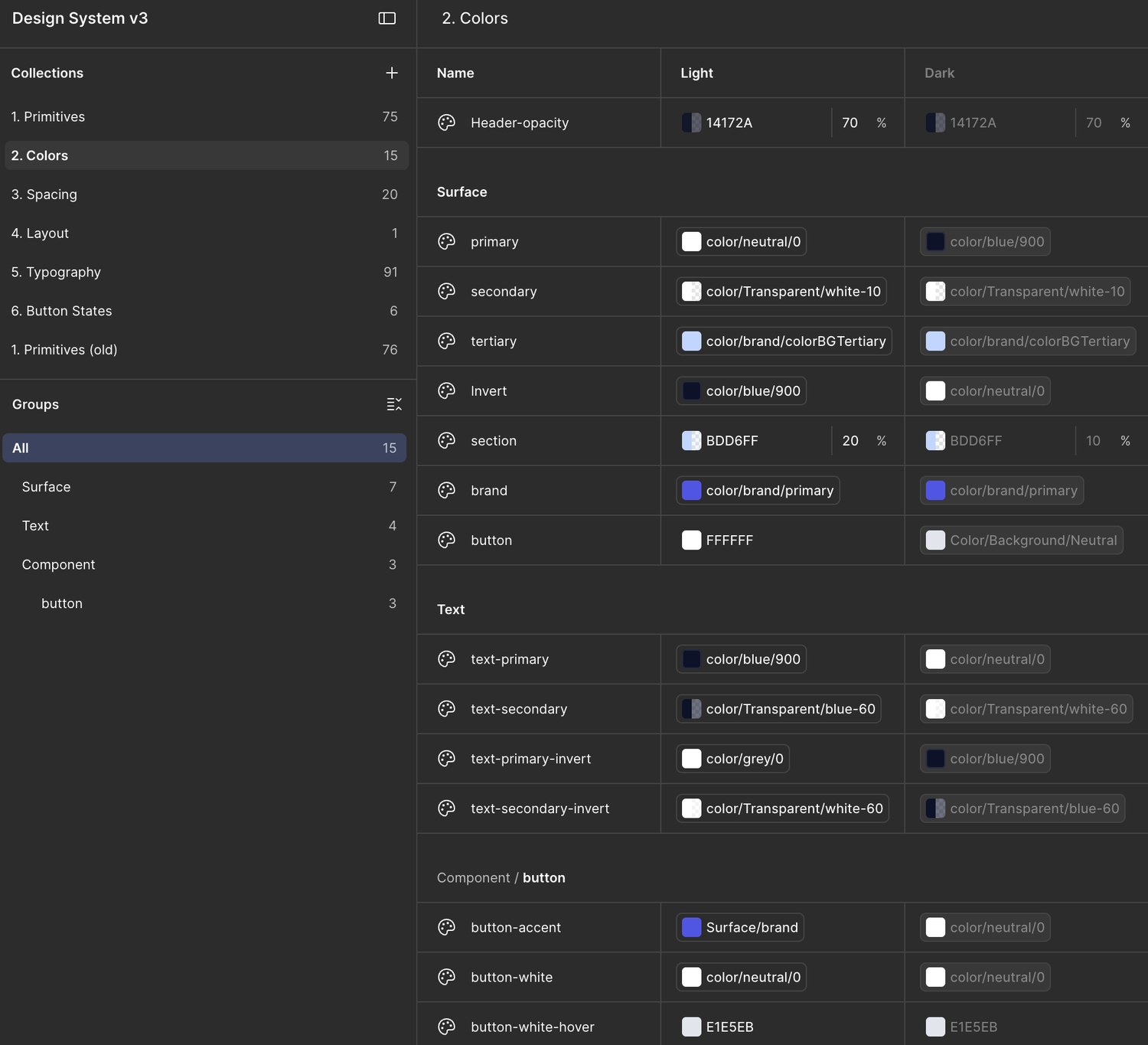
System: Built Design System v3 with 176 variables and semantic tokens, then used it to carry a full rebrand across Light and Dark mode.
During this period, protocol TVL rose from $17.1M to a peak of $25.6M and cumulative options notional passed $500M. These are protocol signals, not direct design attribution.
Problem and Mandate
Risk must be legible before capital moves.
A perpetual futures trade moves through direction, leverage, margin mode, confirmation, funding, and settlement. Every step carries financial consequence, and on chain there is no support desk to reverse a mistake. The interface is the only place where risk can be made visible before it is taken.
Typus compounds the problem with breadth: options auctions, structured vaults, a liquidity pool, and perps share one surface, one wallet, and one design language. A pattern that fails in one product fails everywhere.
Constraints
Financial values had to stay precise enough for professional traders while remaining readable for first-time DeFi users. On-chain mechanics such as oracle pricing and the T+1 profit lock had to be explained in the moment, not in documentation.
My Role
I owned information architecture, user flows, high-fidelity UI, interaction states, responsive behaviour from 1440 to 390, and the design system. Specs included defaults, validation errors, empty states, loading, and compliance review.
Act 1 · Shipped Scope
The product line, separated screen by screen.
Eight surfaces across trading, liquidity, vaults, account management, and games. Each one answers a different question, so the layout changes from screen to screen while the type scale, spacing, and control patterns stay fixed.
TLP
One pool raises four questions at once: what it is worth, what it earns, where the yield comes from, and what sits inside it. Mint controls stay pinned beside the data instead of behind a step.
Act 2 · Deep Dive on Perps
A perps trade is a chain of irreversible decisions. The UI walks them one at a time.
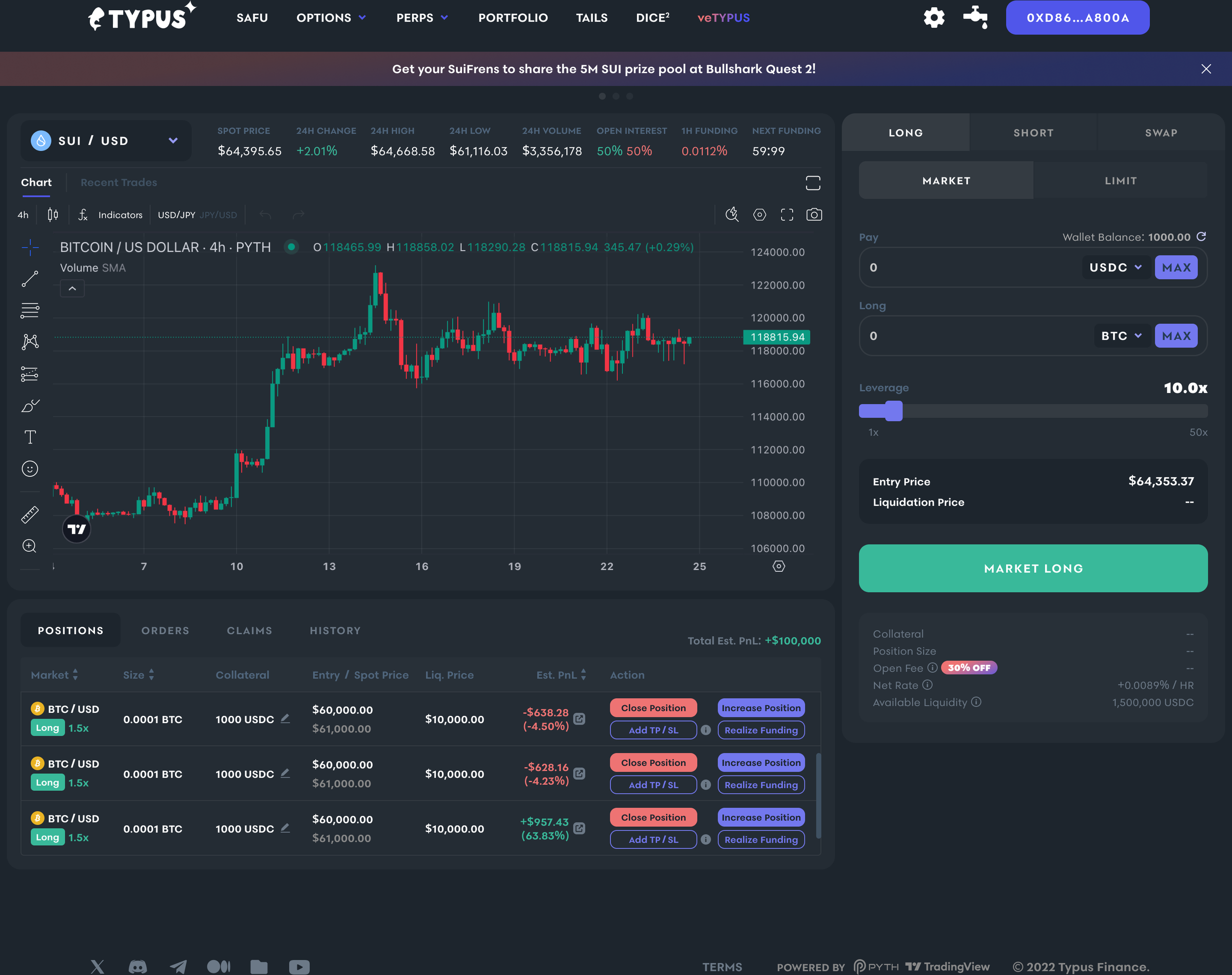
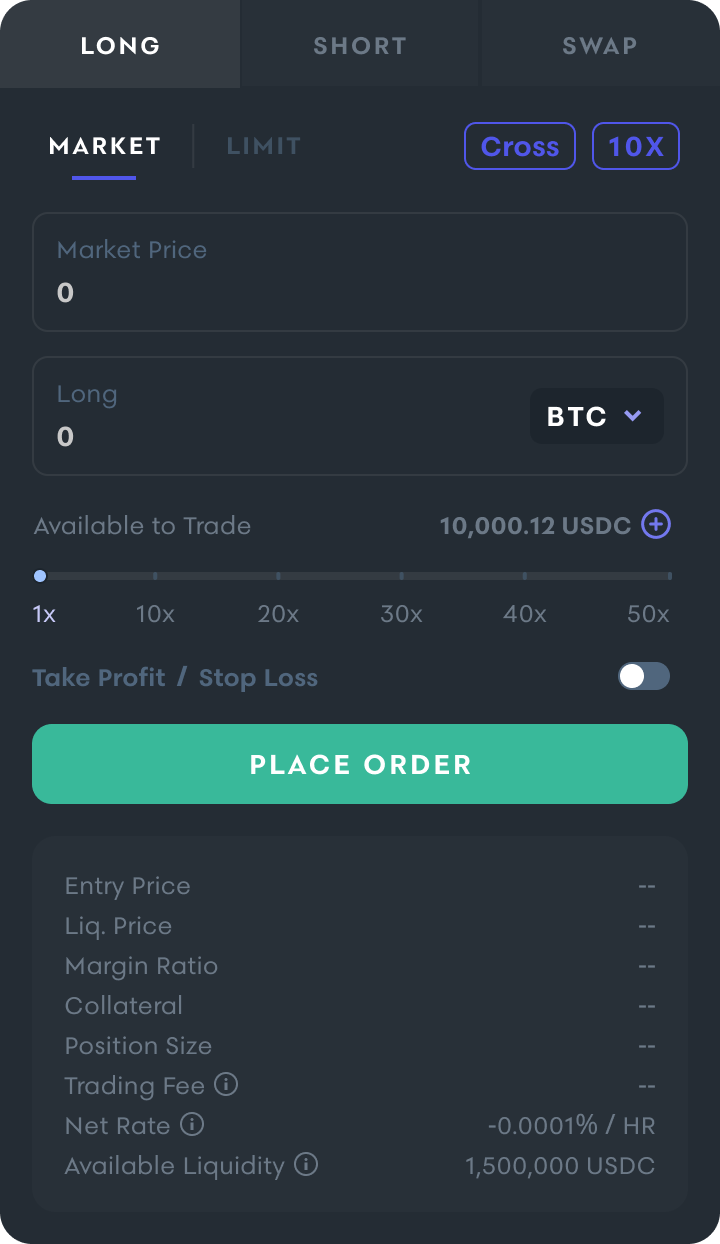
Perpetual futures are the hardest product on the platform: leverage, margin modes, funding rates, and liquidation interact on every order. The design goal was to keep each decision separated, computed, and checked before the transaction is built.
Perps on Sui mainnet: chart, order ticket, and positions in one screen
Long or short, market or limit, cross or isolated margin: the first three decisions sit in one compact ticket.
Five Pre-Commitment Checks
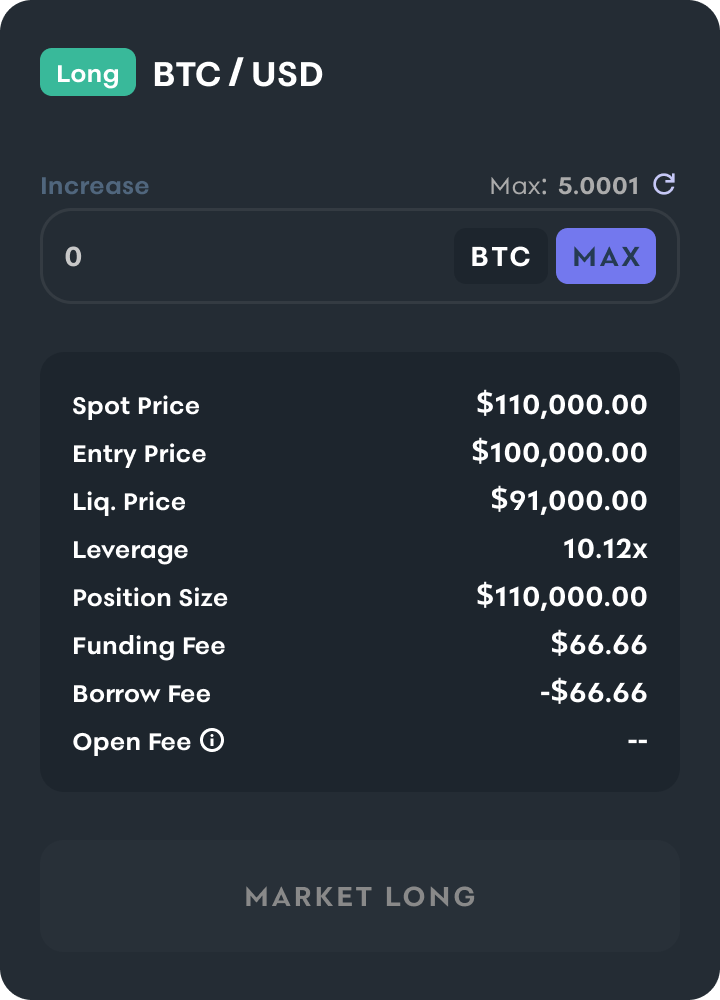
Before input, the dialog establishes the current position: $110,000 exposure at 10.12x leverage, with a $91,000 liquidation price.
While the Position Is Open
Increasing size recalculates the position before submission.
After the trader enters an amount, the UI keeps the previous entry price, liquidation price, leverage, and position size beside their recalculated values. The new open fee appears in the same pre-submit view.
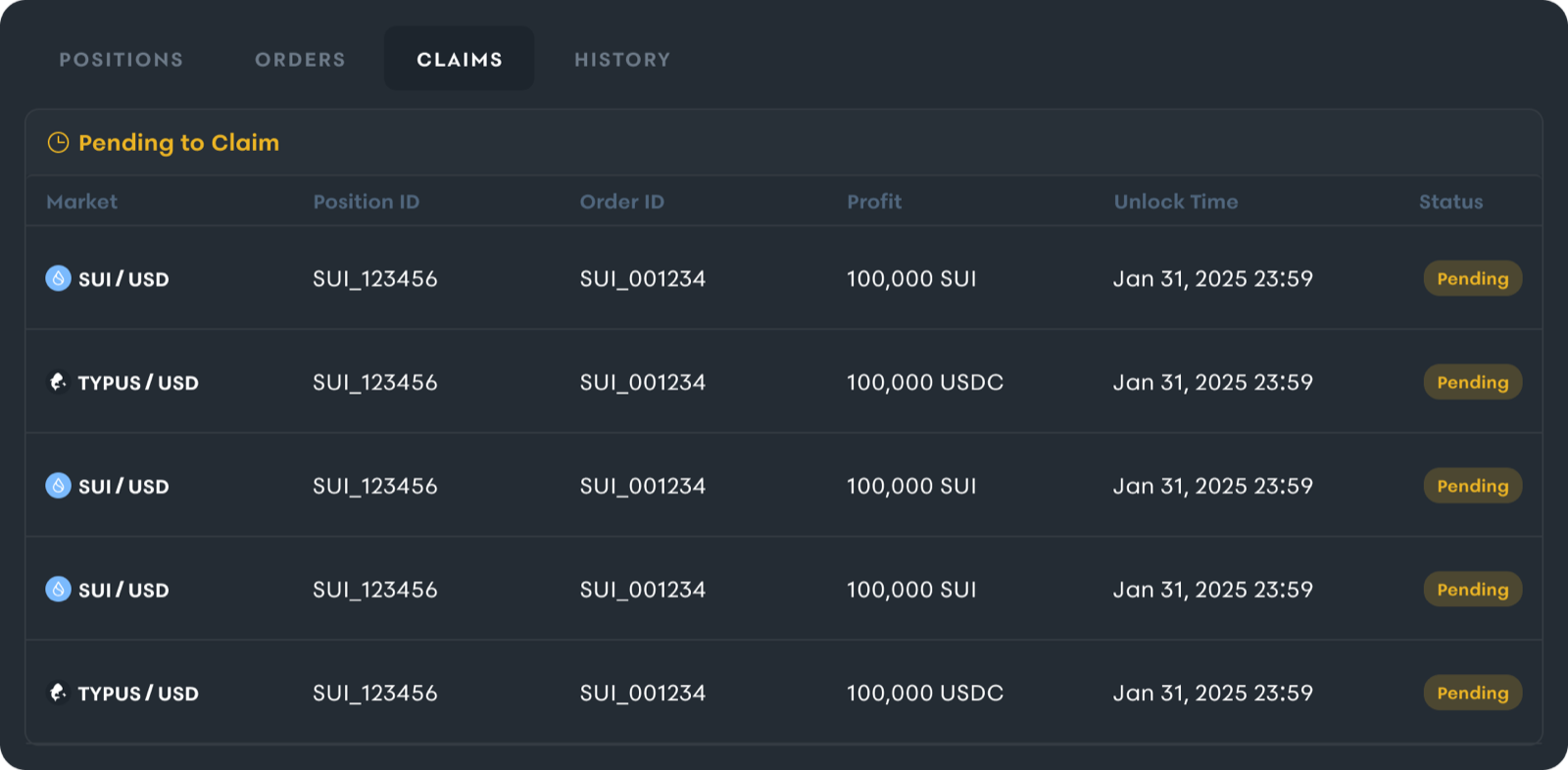
Closed-position profit remains visible with an unlock time during the T+1 review window.
After the Position Closes
Profit moves through an explicit lifecycle.
The product separates pending profit, unlocked claims, compliance holds, and the final account history. A trader can always see where the money is and what happens next.
Act 3 · Rebrand and Design System v3
A rebrand built on variables, not a coat of paint.
In parallel with shipped work I led the v2 rebrand: a new identity in deep navy and electric indigo with a water ripple motif, a restructured information architecture, and Design System v3, the token architecture that makes the new brand enforceable across products. v2 is designed and systemized, pending release.
01 · Landing Page
Feature catalog to audience-led entry.
Before: products followed the order the team shipped them.
Decision: regroup the entry around Earn for lite users and Trading for sophisticated users.
Effect: both audiences reach relevant depth within one scroll.
v1 · shippedv2 · rebrand
02 · TLP Product Page
Dashboard to product evaluation.
Before: price chart, mint panel, and allocation table competed at once.
Decision: isolate the pool detail and explain yield source, boosted APR, and dynamic composition.
Effect: a first-time liquidity provider can evaluate the pool before committing capital.
v1 · shippedv2 · rebrand
03 · Portfolio
Product tables to capital intent.
Before: six tables followed the product roadmap rather than the user’s mental model.
Decision: regroup positions under Trade and Earn.
Effect: portfolio value is understood by intent, not by Typus’s internal product architecture.
v1 · shippedv2 · rebrand
Design System v3: tokens with two layers and two modes.
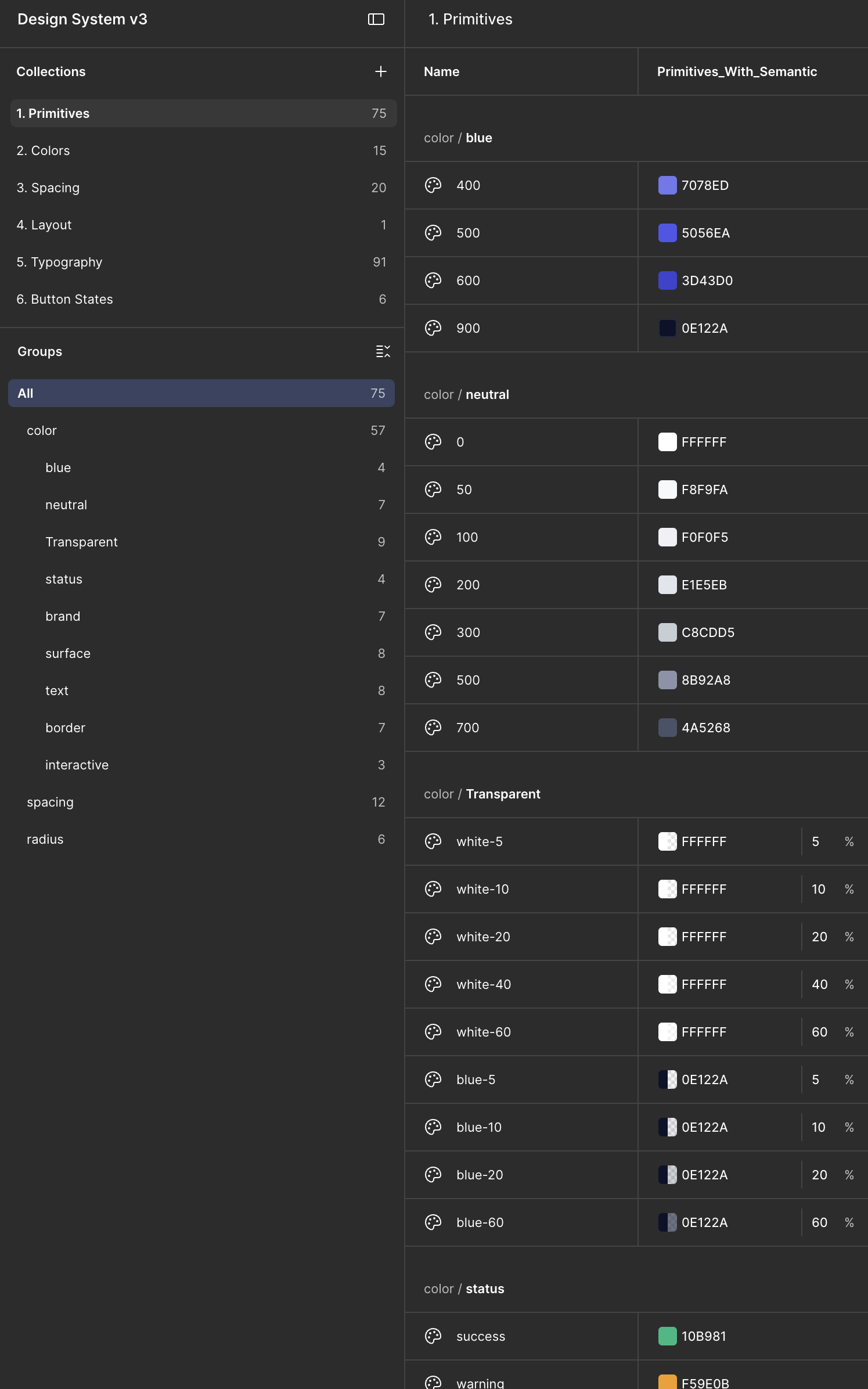
DS3 defines 176 variables across six collections. Primitives hold raw values. Semantic tokens alias primitives for surfaces, text, and components, and every semantic token resolves separately for Light and Dark mode. Typography works like functions: a text style assembles its family, size, weight, and line height from named sub variables, so a scale change propagates through the whole system.
176 variables6 collections2 token layersLight + Dark
One component tree resolves through the same semantic roles in both modes.
Semantic tokens alias primitives, with Light and Dark resolved per modeThe primitives layer: 75 raw values under six collections
Outcome and Reflection
Shipped risk-visible flows, with the rebrand ready for release.
During this period, protocol TVL rose from $17.1M to a peak of $25.6M and cumulative options notional passed $500M. These are protocol signals, not direct design attribution. My shipped contribution was the risk-visible trading flow, eight product surfaces, and the DS3 foundation. The v2 rebrand and Design System v3 are complete and pending release.
Reflection
In DeFi the interface is the risk disclosure. Visual polish means little if a trader cannot see their liquidation price before committing, so the most valuable screens in this case are the unglamorous ones: fee breakdowns, validation errors, and a compliance state nobody requested. Next time I would ship the rebrand incrementally instead of holding it for one release, and instrument the flows earlier so design decisions could be argued with funnel data instead of taste.
Next Case Study
Improving Binance Convert for faster, calmer crypto swaps.
How a high-volume conversion product was made quicker to understand and safer to complete.